








Dangerous Mistakes New Gun Owners Make
Avoiding the most dangerous mistakes new gun owners make begins long before the firearm leaves the dealer’s counter. Black Friday kicks off the busiest gun-buying season of the year. Shoppers head to a variety of stores, including gun stores, and walk out with their first firearm — often without the training, gear, or mental framework that responsible ownership requires. There is more to owning a gun than walking from the store to the shooting range. While many things are do-it-yourself, gun use and safety should not be one of them. Certified instructors operate in almost every community in the country, and a single defensive firearms course costs less than the firearm itself.
The list below covers the dangerous mistakes new gun owners make most often, in roughly the order they tend to occur. None of these are exotic edge cases — these are the routine failures that produce the routine accidents reported every year.
Mistake 1: Skipping the Safety Check
The single most universally violated rule among the dangerous mistakes new gun owners make is failing to verify the chamber and magazine status when the firearm is picked up. Build an unbreakable habit: every time you handle a firearm, verify the chamber is empty and the magazine is removed. Even if someone has just checked the firearm in front of you, check it yourself when it is handed over. This habit is what separates trained gun owners from the people whose names appear in news stories about accidental discharges.
Mistake 2: Pointing the Muzzle in an Unsafe Direction
Treat every firearm as if it is loaded, every single time, no exceptions. The muzzle of a firearm — loaded or not, brand new or decades old — must always be pointed in a direction where an accidental discharge would cause no harm. In a home, that usually means the floor. At a range, that means downrange. The “I checked it, it’s fine” mindset is responsible for a substantial fraction of the dangerous mistakes new gun owners make every year, and it is also the one most cleanly fixed by training muscle memory.
Mistake 3: Putting Your Finger on the Trigger Too Early
The trigger finger does not enter the trigger guard until the muzzle is pointed at the target and the decision to fire has been made. Until that moment, the index finger rests straight along the frame above the trigger guard. This is sometimes the hardest discipline for new owners to internalize because every movie and TV show shows characters walking with the finger on the trigger. Real-world handling does not work that way.
Mistake 4: Storing the Firearm Improperly
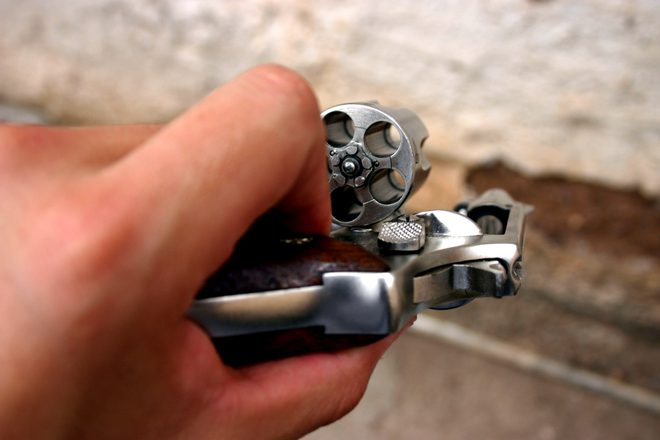
Leaving a firearm accessible to family members, visitors, or burglars is one of the most consequential dangerous mistakes new gun owners make. A handgun on a nightstand is not secure — it is bait. Quick-access biometric or RFID lock boxes give you both rapid access for self-defense and meaningful security against curious children and opportunistic thieves. For long guns, a quality safe bolted to the floor or wall is the standard. Our guide on how to store guns safely at home covers the layered approach in detail.
Mistake 5: Failing to Get Real Training
The owner’s manual is a starting point, not a complete education. New owners need formal training from a certified instructor before relying on the firearm for any defensive purpose. The Bureau of Alcohol, Tobacco, Firearms and Explosives and most state regulators recommend NRA-certified or equivalent training as a minimum baseline. A firearm you have never trained with under stress is unlikely to be useful when you need it most.
We handle the legal part for you.
You know the rules now — here’s the easy part. A real background check on the buyer, a signed bill of sale, and permanent records, done from your phone in about 10 minutes. Flat $50.
Mistake 6: Not Educating Family Members
Even if you never intend for family members to handle the firearm, every adult and old-enough child in the household needs to know what to do if they encounter it. The non-negotiable lessons: do not touch a firearm without the owner present, treat every gun as if it is loaded, and tell a trusted adult immediately if you find an unsecured firearm. The Eddie Eagle program from NRA Foundation is a well-regarded resource for talking to younger children about firearms safety.
Mistake 7: Using the Wrong Ammunition
Loading a firearm with the wrong cartridge can damage the gun, injure the shooter, or produce a catastrophic failure on the first round. Cartridges that look similar — .380 ACP versus 9mm, .38 Special versus .357 Magnum, .223 versus 5.56 NATO — are not always interchangeable. Verify the caliber stamped on the firearm’s slide or barrel against the markings on every box of ammunition before loading. This is one of the most preventable dangerous mistakes new gun owners make and one of the most expensive when it goes wrong.
Mistake 8: Using the Wrong Holster
A cheap holster that does not fit your specific firearm model is worse than no holster at all. An ill-fitting holster can fail to retain the firearm, allow the trigger guard to be exposed, or even cause an accidental discharge if material works its way inside the trigger guard. Buy a model-specific holster from a reputable manufacturer. Our guide on choosing the perfect holster for your gun walks through what to look for.
Mistake 9: Ignoring Federal and State Firearm Laws
One of the more frequently overlooked dangerous mistakes new gun owners make is failing to read up on local law before buying. Gun laws differ from one jurisdiction to the next, sometimes dramatically. It is the owner’s responsibility to know what is legal where they live, where they travel, and where they store the firearm. Federal rules apply everywhere; state and local rules layer on top. Concealed carry reciprocity, magazine capacity limits, transport requirements, and storage mandates all vary. Ignorance of the law is not a defense in any state.
Avoiding These Dangerous Mistakes New Gun Owners Make
Responsible firearm ownership prevents accidents and saves lives. Every one of the dangerous mistakes new gun owners make on this list has produced documented tragedies — accidental discharges, child injuries, theft, legal trouble. Every one is also avoidable. The non-negotiable starter habits for new gun owners:
- Verify chamber and magazine status every time you pick up the firearm
- Keep the muzzle pointed in a safe direction at all times
- Keep your trigger finger off the trigger until you are ready to fire
- Store the firearm securely with a quality safe or quick-access lock box
- Take a defensive firearms course before relying on the firearm for protection
- Know the federal and state laws that apply to your situation
Make these habits automatic and the firearm becomes the safety tool it is meant to be.

A handshake isn’t a transfer.
Make it legal.
In your state, the seller carries the federal liability. One undocumented sale to the wrong person is the difference between a clean record and 18 U.S.C. § 922(d). For \$50, you get proof you did it right.
- Real background check on the buyerMulti-source federal, state & county criminal + sex-offender records.
- Official bill of sale, signed by both partiesElectronic. Documented to hold up in court.
- Lifetime digital records in your Gun VaultPull them 5, 10, 20 years from now.
- Done from your phone in ~10 minutesNo gun-shop visit required in your state.
When my father passed I inherited a safe full of guns and had no idea how to sell them legally. This walked me through every one.— Henry P., verified seller
Secure checkout · No FFL markup · No range fees · Flat $50 every time.