





Gun Control Around the Globe: A Comparison Between the United States and Other Nations
A look at gun control around the globe reveals just how distinctive the United States actually is on the question of private firearm ownership. The Second Amendment of the U.S. Constitution treats the right to keep and bear arms as a constitutional protection that no ordinary law can erase. In most other developed nations, gun ownership is treated as a regulated privilege earned through licensing, training, and demonstrated need — not as a right.
Comparing gun control around the globe is not a debate over which system is better. It is context for the policy conversations that happen inside any country, and a useful exercise for any American gun owner who wants to understand why the U.S. framework looks the way it does. Below are five well-documented firearm regimes, plus the United States, and how each compares.
Why Comparing Gun Control Around the Globe Matters
Most policy debates inside the United States benefit from understanding what other countries have actually tried. Some countries with strict gun control still see firearm crime; some countries with permissive laws have very low gun crime; and the variables that drive outcomes (cultural, economic, geographic) often matter more than the specific statutes. A look at gun control around the globe is not an argument for or against any particular policy — it is context for the conversation, and a reminder that the same set of rules can produce very different outcomes in different societies.
Gun Control Around the Globe: Canada
Canada classifies firearms into three tiers: non-restricted (most shotguns and ordinary rifles), restricted (most handguns and semi-automatic rifles), and prohibited (automatic weapons and certain others). The minimum age for ownership is 18, and every owner must complete the Canadian Firearms Safety Course and pass a federal background check before receiving a Possession and Acquisition License (PAL). Restricted firearms require a separate registration certificate and may only be transported under strict conditions — typically between the owner’s home and an approved range or gunsmith. Canada is notably more permissive than European norms but considerably more restrictive than the United States.
Gun Control Around the Globe: Israel
Israel’s approach is shaped by its security situation and the fact that most adult citizens have completed military service. Despite that context, civilian firearm regulations are among the strictest in the developed world. All firearms must be registered with the government, assault-style weapons are banned for civilians, and a license is granted only to Israeli citizens or permanent residents 21 years of age or older. Applicants must speak Hebrew and demonstrate a valid reason to carry — typically a residence in a high-risk area, a security profession, or a documented threat. The Israeli framework is one of the more interesting case studies in international gun policy because high gun training combines with low civilian gun ownership.
Gun Control Around the Globe: The United Kingdom
The United Kingdom’s framework is the result of decades of incremental tightening, with two major statutes shaping the modern landscape. The Firearms (Amendment) Act of 1988, passed in response to the Hungerford massacre of 1987, expanded the categories of weapons private citizens cannot legally own and increased the requirements for the firearms still permitted. The Firearms (Amendment) Act of 1997, passed after the Dunblane school shooting, extended further restrictions to most handguns. As a result, civilian handgun ownership in Great Britain is now extraordinarily limited, and most legal civilian firearms are shotguns and bolt-action rifles used for hunting and sport shooting.
We handle the legal part for you.
You know the rules now — here’s the easy part. A real background check on the buyer, a signed bill of sale, and permanent records, done from your phone in about 10 minutes. Flat $50.
Gun Control Around the Globe: Norway
Norway is often cited as a country that combines permissive gun ownership with extremely low gun crime. Applicants must be at least 18 years old (16 with parental consent for hunting rifles), demonstrate a valid reason for ownership (typically hunting or sport shooting), pass a background check, and complete a safety course. Norway has one of the highest civilian firearm ownership rates in Europe but consistently shows very low rates of firearm violence — a pattern policy researchers attribute primarily to cultural factors, social trust, and economic conditions rather than to the laws alone. The Norwegian example is a useful counter to assumptions in either direction about gun control around the globe.
Gun Control Around the Globe: Japan
Japan represents the strictest end of the spectrum among major industrialized democracies. Most firearms are illegal for civilian ownership, and Japan has one of the lowest rates of civilian gun ownership in the world. Under Japan’s “Firearm and Sword Possession Control Law,” only shotguns, air guns, and firearms used for legitimate research or industrial purposes are permitted, and obtaining a license requires multiple background checks, mental health evaluations, regular renewals, and proof of a secure storage location. The result is that Japan typically reports fewer than ten firearm-related deaths nationwide per year — a number any American policymaker reading the comparative literature has to take seriously.
The United States: A Constitutional Outlier in Gun Control Around the Globe
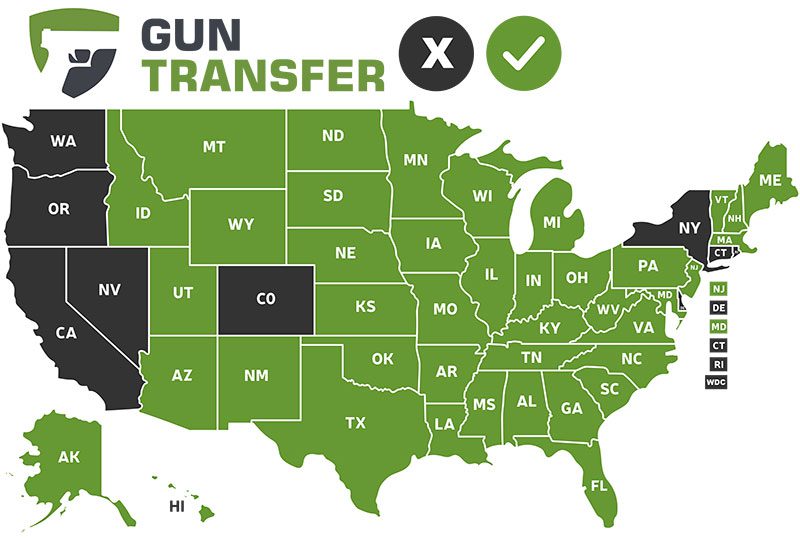
The United States stands apart from every country above in one crucial respect: the right to keep and bear arms is enumerated in the Constitution itself. The Bureau of Alcohol, Tobacco, Firearms and Explosives administers federal firearm regulations, but Congress cannot ban civilian firearm ownership outright without amending the Constitution — a process requiring two-thirds of both chambers and ratification by three-fourths of the states. Federal law sets a baseline for licensed dealers (background checks under the National Instant Criminal Background Check System, prohibited categories of buyers, age minimums) and individual states layer their own rules on top, ranging from permissive shall-issue concealed carry regimes to far more restrictive frameworks in a handful of states.
The patchwork creates significant variation within the United States that does not exist in countries with centralized national gun policy. A firearm purchased legally in Idaho may be entirely illegal to possess in New York or California. The states differ on magazine capacity limits, semi-automatic rifle classifications, waiting periods, training requirements, and concealed carry reciprocity. No survey of gun control around the globe is complete without recognizing that the U.S. has fifty distinct sub-systems on top of the federal baseline.
Common Patterns in Gun Control Around the Globe
Looking across these regimes, a few patterns emerge:
- Almost every developed country requires background checks for firearm purchases — the U.S. requires them for all dealer sales but only some states extend the requirement to private sales
- Most other countries treat gun ownership as a privilege requiring demonstrated need; the United States treats it as a right
- Training requirements vary widely — some countries (Canada, Israel) require formal courses; others rely on the dealer or buyer to ensure competence
- Storage requirements are tightening worldwide, with secure storage now mandatory in most countries that allow private ownership
- Civil liability for misuse is increasingly common, even where criminal charges are not filed
What U.S. Gun Owners Should Take From Gun Control Around the Globe
The constitutional protection for firearm ownership in the United States is genuinely unique among modern democracies. Other countries with comparable population sizes, comparable wealth, and comparable rule-of-law traditions have all opted for licensing-based frameworks where gun ownership is conditional. The American framework treats it as a right that government may regulate but not extinguish.
Whether one views this as a strength or a weakness depends on which trade-offs matter most. The honest survey of gun control around the globe shows that approaches range from near-prohibition (Japan) to constitutional protection (the United States), with most developed countries somewhere in the middle. For more on responsible firearm ownership in the United States specifically, see our guides on how to store guns safely at home and dangerous mistakes new gun owners make.

A handshake isn’t a transfer.
Make it legal.
In your state, the seller carries the federal liability. One undocumented sale to the wrong person is the difference between a clean record and 18 U.S.C. § 922(d). For \$50, you get proof you did it right.
- Real background check on the buyerMulti-source federal, state & county criminal + sex-offender records.
- Official bill of sale, signed by both partiesElectronic. Documented to hold up in court.
- Lifetime digital records in your Gun VaultPull them 5, 10, 20 years from now.
- Done from your phone in ~10 minutesNo gun-shop visit required in your state.
When my father passed I inherited a safe full of guns and had no idea how to sell them legally. This walked me through every one.— Henry P., verified seller
Secure checkout · No FFL markup · No range fees · Flat $50 every time.