







Gun Politics: What Is It All About?
Gun politics what is it all about, and why does the same set of facts keep producing the same circular debate every time a high-profile shooting reaches the news? The short answer is that gun politics in the United States is the long-running disagreement between two camps with fundamentally different starting assumptions about the proper role of firearms in civilian life. Both sides cite real data, real history, and real constitutional principles. They simply weigh those things differently.
This article is an overview of gun politics in the United States — what the debate is actually about, what each side argues, and what is constitutionally settled versus what remains contested. It is intentionally evergreen and balanced; the goal is to inform, not to persuade.
Gun Politics What Is It All About at the Most Basic Level
The civilian population of the United States owns an estimated 400 million firearms — more guns than people. Roughly 32% of American households report at least one gun in the home, and that share has remained relatively stable over decades despite shifts in the political landscape around it. With ownership at that scale, gun politics is not a fringe topic. It is a central, recurring American debate that surfaces every time a mass shooting hits the news cycle, and one that policymakers cannot avoid even when they would prefer to.
Gun politics in the United States primarily covers two positions on civilian firearm ownership: gun rights and gun control.
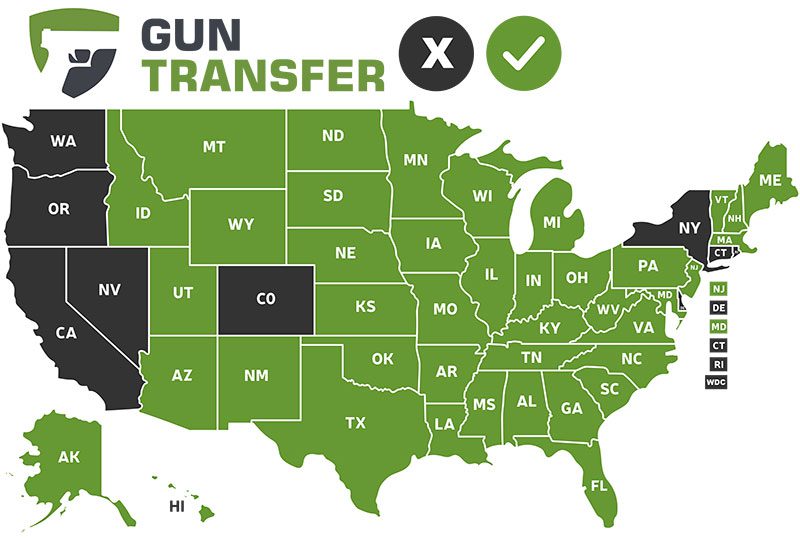 The two camps disagree on what the Constitution actually protects, what evidence shows about the effects of various policies, and what the proper trade-off is between individual liberty and collective safety. The disagreement is not new — it is older than most current statutes — and the foundational arguments have stayed remarkably stable even as the specific policy proposals have changed.
The Gun Rights Position
Gun rights advocates hold that the Second Amendment of the U.S. Constitution protects an individual right to keep and bear arms. The text reads, in full: “A well regulated Militia, being necessary to the security of a free State, the right of the people to keep and bear Arms, shall not be infringed.” Gun rights advocates emphasize that the operative clause (“the right of the people to keep and bear arms shall not be infringed”) protects an individual right that no ordinary statute can override.
Gun rights advocates also argue that an armed civilian population deters violent crime. Studies they cite typically find that violent crime rates are not consistently higher in U.S. states with permissive gun laws compared with restrictive ones, and that defensive gun uses — incidents where a firearm is used by a civilian to stop or deter a crime — happen more often than mass shootings receive attention. The Federal Bureau of Investigation’s data on justified civilian use of firearms is one of the data sources most often cited in this part of the debate.
The Bureau of Alcohol, Tobacco, Firearms and Explosives is the federal agency that administers federal firearm regulations under the Second Amendment framework, and gun rights advocates generally support its enforcement of existing laws while opposing the expansion of new ones.
The Gun Control Position
Gun control advocates hold that the United States has substantially more gun-related deaths per capita than peer democracies, and that the difference is largely attributable to the relative ease of acquiring firearms in the U.S. They point to countries like Australia, Japan, and the United Kingdom, where strict licensing regimes correlate with much lower rates of firearm-related deaths.
Gun control advocates push for measures such as universal background checks (extending the existing dealer-sale check to private-party sales), waiting periods, magazine capacity limits, restrictions on semi-automatic rifles, secure storage requirements, and red-flag laws that allow temporary firearm removal from individuals deemed an imminent threat. They argue that these measures preserve constitutional rights for responsible owners while reducing access for those most likely to misuse a firearm.
We handle the legal part for you.
You know the rules now — here’s the easy part. A real background check on the buyer, a signed bill of sale, and permanent records, done from your phone in about 10 minutes. Flat $50.
Gun Politics What Is It All About Constitutionally
The U.S. Supreme Court has handed down two landmark decisions that frame the modern gun politics debate. In District of Columbia v. Heller (2008), the Court held that the Second Amendment protects an individual right to keep firearms in the home for self-defense, independent of any connection to militia service. In McDonald v. City of Chicago (2010), the Court held that this right applies to state and local governments through the Fourteenth Amendment.
The combined effect of Heller and McDonald is that an outright civilian gun ban is unconstitutional anywhere in the United States. What remains contested is exactly which regulations short of a ban are permissible. The Court’s 2022 New York State Rifle & Pistol Association v. Bruen decision further sharpened the test for evaluating gun regulations, requiring them to be consistent with the historical tradition of firearm regulation. Lower courts and state legislatures continue to work out what that test means in practice for specific statutes.
Common Ground in Gun Politics
Despite the heat, large supermajorities of Americans across the political spectrum agree on several specific gun policies. Polling consistently shows broad support for:
- Background checks on all firearm sales, including private-party sales
- Restricting firearm access for people convicted of violent crimes
- Restricting firearm access for people with certain serious mental health adjudications
- Requiring secure storage of firearms in homes with children
- Stronger penalties for straw purchasing — buying a firearm on behalf of someone legally prohibited from owning one
- Increased funding for mental health services that overlap with firearm risk
The areas of genuine ongoing disagreement are narrower than the debate’s volume suggests: assault-weapons classification and bans, magazine capacity limits, concealed carry reciprocity across state lines, and red-flag law procedures.
What Gun Politics Means for Individual Owners
For individual gun owners, gun politics is less abstract than the news coverage makes it appear. The practical questions are simpler: what does federal law require, what does my state require, what changes are likely on the horizon, and how should I document and store my firearms to comply with all of them? Responsible firearm ownership — secure storage, formal training, complete documentation, awareness of every law that applies — remains the single most effective response to whatever direction the political winds happen to be blowing.
For more on the specific habits that responsible ownership requires, see our guides on how to store guns safely at home and dangerous mistakes new gun owners make.
Gun Politics What Is It All About in One Paragraph
Gun politics is the long-running American debate over the proper role of firearms in civilian life — a debate framed by the Second Amendment, shaped by Supreme Court rulings, fought over specific statutes at the federal and state level, and reignited by every mass shooting that reaches national news. There is no clean resolution coming, because both sides hold positions rooted in serious arguments. What every American gun owner can do, regardless of where they fall in that debate, is be the kind of responsible owner the system depends on — knowledgeable, well-trained, and meticulous about safety and law.

A handshake isn’t a transfer.
Make it legal.
In your state, the seller carries the federal liability. One undocumented sale to the wrong person is the difference between a clean record and 18 U.S.C. § 922(d). For \$50, you get proof you did it right.
- Real background check on the buyerMulti-source federal, state & county criminal + sex-offender records.
- Official bill of sale, signed by both partiesElectronic. Documented to hold up in court.
- Lifetime digital records in your Gun VaultPull them 5, 10, 20 years from now.
- Done from your phone in ~10 minutesNo gun-shop visit required in your state.
When my father passed I inherited a safe full of guns and had no idea how to sell them legally. This walked me through every one.— Henry P., verified seller
Secure checkout · No FFL markup · No range fees · Flat $50 every time.