






Private Party Gun Transfers in Colorado (Video)
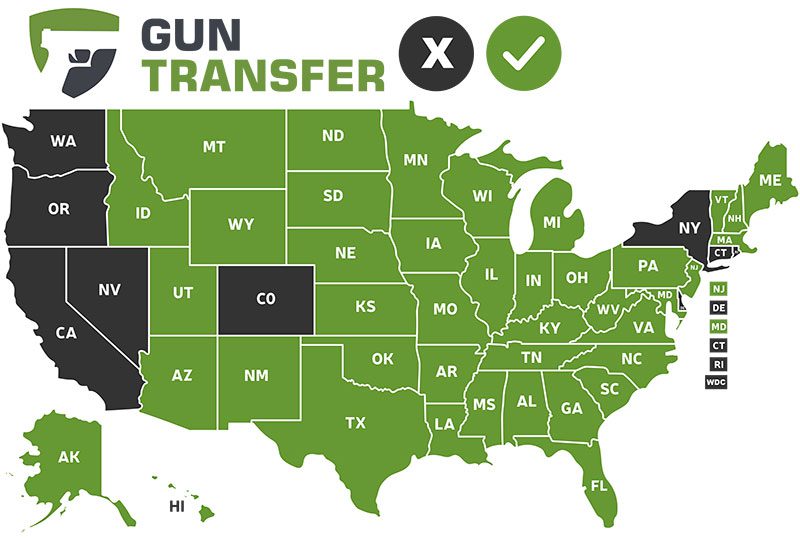
Private party gun transfers in Colorado are governed by some of the more restrictive state-level firearm rules in the country. Colorado is one of roughly fifteen states that has extended the federal background check requirement to private-party firearm sales — a framework commonly known as a universal background check law. The practical effect is that most private party gun transfers in Colorado must be processed through a licensed firearms dealer (FFL) who runs a background check on the buyer through the National Instant Criminal Background Check System (NICS). There are specific exceptions, but assuming an exception applies without verifying is one of the most common ways Colorado gun owners get into legal trouble.
This guide explains how private party gun transfers in Colorado actually work — the universal background check rule, the documented exceptions, the process for an FFL transfer when the rule applies, and the specific things Colorado sellers should document to protect themselves. The video at the end of this article covers the same ground in a different format.
The Universal Background Check Rule on Private Party Gun Transfers in Colorado
Colorado Revised Statutes § 18-12-112 is the law that controls most private party gun transfers in Colorado. The statute requires that, with limited exceptions, any transfer of a firearm between two private parties must be processed through a licensed firearm dealer who:
- Conducts a background check on the buyer through the Colorado Bureau of Investigation (CBI), which runs the check through the federal NICS system
- Records the transfer on a Colorado-specific form documenting both parties and the firearm
- Holds the firearm during any waiting period that applies to the buyer
- Charges a fee for the service (typically $30-$50 in Colorado, by statute capped at $10 plus the dealer’s actual NICS fee)
This requirement applies to almost every private party gun transfer in Colorado regardless of how the parties found each other — classified ad, gun show, friend-of-a-friend, online forum, or in-person at a range.
Exceptions to the Background Check Requirement
There are documented exceptions to the universal background check rule. Private party gun transfers in Colorado that fall into these categories generally do NOT require an FFL background check:
- Bona fide gifts to immediate family members — gifts (not sales) between spouses, parents and children, grandparents and grandchildren, and siblings. The statute specifies which family relationships qualify; cousins, in-laws, and friends-treated-as-family do not
- Transfers from estate to heir — firearms passing through a will or by intestate succession to an heir, with the transfer recorded as part of the probate process
- Temporary transfers for hunting or sport — lending a firearm to someone at a range, while hunting, or for a target shooting event, where the loan does not exceed 72 hours and stays within Colorado
- Transfers between law enforcement officers in the course of their official duties
- Antique firearms as defined by federal law (generally pre-1899 manufacture or replicas firing only black powder or muzzle-loading)
Each of these exceptions has specific documentation requirements that the parties should follow even though the FFL background check is not required. A bona fide family gift, for example, is much harder to challenge years later if the parties documented the gift with a written statement at the time.
How the FFL Process Works for Private Party Gun Transfers in Colorado
When a transfer does require the universal background check (which is most of them), the process is straightforward but takes both parties’ time:
- Both buyer and seller find a willing FFL dealer (most Colorado FFLs offer this service for a fee)
- Both parties bring valid government-issued ID and the firearm to the dealer’s location
- The buyer fills out ATF Form 4473 just as they would for a retail purchase
- The dealer runs the background check through CBI, which queries NICS
- If the check passes immediately, the transfer can complete on the spot. If it returns a delay or deny, Colorado law specifies how long the dealer can hold the firearm pending resolution
- The dealer records the transfer in their A&D bound book just as for any retail sale
- Both parties walk out with documentation of the transfer; the seller hands over the firearm to the buyer at the dealer’s location
The whole process typically takes 30-60 minutes if the buyer passes immediately. Costs vary by dealer; Colorado law caps the transfer fee at $10 plus the dealer’s actual cost of running the NICS check, but in practice many dealers charge somewhat more.
Documentation Best Practices for Private Party Gun Transfers in Colorado
Even when the law doesn’t require it, complete documentation protects both parties on any private party gun transfers in Colorado that fall into an exception category. Recommended documentation:
- A signed, dated bill of sale identifying both parties (full legal names, addresses, ID numbers)
- The firearm’s make, model, caliber, and serial number
- The nature of the transfer (sale, gift, loan, inheritance) and the price if applicable
- The exception being relied on, if any (bona fide family gift, estate transfer, temporary loan)
- The buyer’s signed attestation that they are not a prohibited person under federal or Colorado law
- For temporary loans: the date and time the loan began and ended
- Both parties’ signatures (and ideally a witness)
Keep a paper copy and an encrypted digital backup. If the firearm later surfaces in any inquiry, the documentation answers the question of when and how the firearm changed hands without a long investigation.
We handle the legal part for you.
Colorado requires a licensed dealer for private transfers. We route you to a local FFL at no markup and handle the bill of sale and permanent records for you. Flat $50.
Federal Rules That Still Apply to Private Party Gun Transfers in Colorado
Colorado state law layers on top of federal law, not in place of it. Even when an exception to the Colorado universal background check applies, federal rules still apply:
- You may not knowingly transfer a firearm to a federally prohibited person
- You may not transfer a firearm across state lines without going through an FFL — interstate private transfers are a federal felony regardless of state law
- Federal age minimums apply (21 for handguns, 18 for long guns)
- NFA-regulated items (machine guns, suppressors, SBRs) follow federal NFA transfer rules separately
The Bureau of Alcohol, Tobacco, Firearms and Explosives publishes detailed federal guidance that applies in addition to anything specific to Colorado.
Why Private Party Gun Transfers in Colorado Justify Extra Care
Colorado’s universal background check rule is enforced. Sellers who skip the FFL step on a transfer that did not actually fit an exception have been prosecuted under § 18-12-112, with penalties including misdemeanor or felony charges depending on the circumstances. Buyers who knowingly participate in a non-compliant transfer face their own exposure. The law is not aspirational; it’s actively applied.
The takeaway for Colorado gun owners is not to avoid private-party transfers — they remain legal under the documented exceptions — but to verify that the specific transfer you are planning fits an exception, and to document the basis for the exception as you go. When in doubt, the FFL background check costs $30-$50 and removes any ambiguity. That is meaningful protection compared to a misdemeanor or felony charge based on a misunderstood exception.
Watch the Walkthrough on Private Party Gun Transfers in Colorado
The video below covers the same ground in a different format, with additional context on how Colorado’s universal background check law has been applied in practice:
For More on Compliant Firearm Transactions
Private party gun transfers in Colorado are one of the more regulated state environments in the country, but the underlying principles of complete documentation and verification apply everywhere. For more on the broader practice of safe and legal private-party transactions, see our guides on 3 tips to protect yourself when selling a gun, gun transfer laws generally, and digital lifetime records for documentation.

A handshake isn’t a transfer.
Make it legal.
In Colorado, the seller carries the federal liability. One undocumented sale to the wrong person is the difference between a clean record and 18 U.S.C. § 922(d). For \$50, you get proof you did it right.
- Real background check on the buyerMulti-source federal, state & county criminal + sex-offender records.
- Official bill of sale, signed by both partiesElectronic. Documented to hold up in court.
- Lifetime digital records in your Gun VaultPull them 5, 10, 20 years from now.
- Routed to a local licensed dealer — no markupColorado requires an FFL; we handle the paperwork and records.
Fast, clean, and I have the paperwork forever. Exactly what I wanted and cheaper than my local FFL.— Marcus R., verified seller
Secure checkout · No FFL markup · No range fees · Flat $50 every time.