







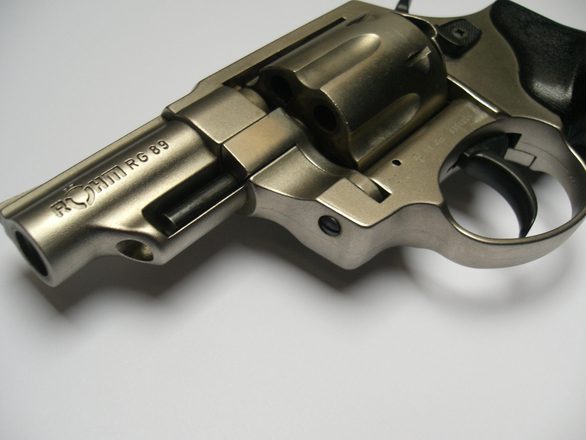
Things to Consider When Gifting Firearms
The things to consider when gifting firearms are not the same as the things to consider when giving any other gift. There is a natural tendency to want to share the activities we enjoy with the people we love. A hunter, a competitive shooter, or a longtime firearm collector often wants to introduce a partner, child, or friend to the same recreation. A gun can be a meaningful, generational gift — but it is also a regulated piece of property that comes with both legal and ethical obligations the giver should think through carefully before wrapping anything.
This guide covers the things to consider when gifting firearms in plain English: who can legally receive a firearm gift, how the transfer must actually happen, what documentation matters, and the responsibilities the giver should think about beyond the legal minimum.
The First of the Things to Consider When Gifting Firearms: Legal Capacity
The first question, before any wrapping or shopping, is whether the intended recipient can legally own a firearm at all. Not everyone can. The federal categories of prohibited persons under 18 U.S.C. § 922(g) include:
- Anyone convicted of a crime punishable by more than one year in prison (most felonies)
- Anyone convicted of a misdemeanor crime of domestic violence
- Fugitives from justice
- Unlawful users of controlled substances
- Anyone adjudicated as mentally defective or committed to a mental institution
- Anyone unlawfully in the United States
- Anyone dishonorably discharged from the armed forces
- Anyone subject to a domestic-violence restraining order
If your intended recipient falls into any of these categories, the gift cannot legally happen. State law adds additional categories in many states, including age minimums above the federal floor (18 for long guns, 21 for handguns). Some states require a permit-to-purchase or firearm owner ID before a person can receive any firearm. The Bureau of Alcohol, Tobacco, Firearms and Explosives publishes federal guidance, and your state attorney general’s website is the right source for state-specific rules.
Things to Consider When Gifting Firearms: Same-State vs. Different-State Recipients
The biggest legal divide on the things to consider when gifting firearms is whether the giver and recipient live in the same state. Federal law treats the two situations very differently.
If the recipient lives in your same state, federal law generally permits a direct private-party gift between two unlicensed individuals (subject to state law layered on top). You can hand over the firearm to a same-state family member or friend without going through a Federal Firearms Licensee — provided your state does not require a background check on private transfers (a roughly 12-state minority does require it).
If the recipient lives in a different state, federal law requires the gift to go through an FFL in the recipient’s state. You cannot legally ship or hand-deliver a firearm directly to an out-of-state recipient who is not federally licensed. The transfer must route through a dealer, who runs a background check on the recipient just as for a retail sale.
How to Actually Give the Gift: Three Common Approaches
Among the things to consider when gifting firearms is the practical question of HOW to deliver the firearm. Three approaches work for most situations:
- Buy and gift directly (same state, no state-level background check requirement). You purchase the firearm in your name from a dealer, then privately gift it to the recipient. The 4473 lists you as the purchaser. The subsequent gift is a private transfer; federal law permits it within the same state to a non-prohibited person
- Buy a gift certificate from a gun store. The recipient goes to the dealer, selects the firearm, and completes the 4473 themselves. The 4473 lists the recipient as the buyer. This is the simplest approach in most cases — the dealer runs the background check, the legal paperwork is complete, and you avoid any complexity around the original purchase being in your name
- Use an FFL transfer (different states). If the recipient is in another state, ship the firearm to an FFL in their state and have them complete a 4473 with the dealer to receive the firearm. Handguns may be shipped only by common or contract carrier (not USPS). Rifles and shotguns may be shipped by USPS by a non-licensee, though many shippers prefer a common carrier for tracking and liability reasons
The gift-certificate approach is by far the most common and the easiest to execute correctly. Both major chain firearm retailers and most local gun shops sell gift certificates that can be applied toward any firearm in their inventory.
We handle the legal part for you.
You know the rules now — here’s the easy part. A real background check on the buyer, a signed bill of sale, and permanent records, done from your phone in about 10 minutes. Flat $50.
Things to Consider When Gifting Firearms Across State Lines
Interstate firearm gifting deserves its own discussion because so many people accidentally violate federal law on a holiday or birthday gift. The rules:
- You may not personally transport a firearm across state lines to give to a non-FFL recipient. The transport itself is the federal violation
- You may not ship a firearm via USPS to an unlicensed individual
- You may ship a firearm via common or contract carrier (UPS, FedEx) directly to an FFL in the recipient’s state, who then transfers it to the recipient
- The recipient pays for the FFL transfer fee (typically $30-$50) and completes a 4473 just as for a retail purchase
- The recipient must be legal to acquire that firearm under both federal law and the law of their state
Skipping any of these steps is a federal felony, even for a well-intentioned gift between family members. The shortcut of “I’ll just bring it with me at Christmas” is not legally available.
Things to Consider When Gifting Firearms: Documentation and Records
Even when the gift is legal and the FFL handles the formal transfer, the giver should retain documentation of the transaction. A simple written gift acknowledgment — date, parties, firearm details, the fact that it was a gift rather than a sale — protects both parties if any question ever arises about how the firearm changed hands. The recipient retains the original 4473 from the FFL transfer; the giver retains the gift acknowledgment.
For gifts within the same state without an FFL transfer, a bill of sale (or gift acknowledgment) signed by both parties is even more important. Federal law does not require it, but the protection is real — without documentation, even a perfectly legal family gift becomes a longer conversation if the firearm ever surfaces in any kind of inquiry years later.
The Ethical Things to Consider When Gifting Firearms
Beyond the legal questions, the things to consider when gifting firearms include some genuinely ethical ones:
- Does the recipient actually want the firearm? A firearm gift to someone who has not asked for one and has no interest in shooting is unlikely to be used responsibly
- Is the recipient ready for the responsibility? Storage, training, legal compliance, and the daily discipline of safe handling are real obligations. A first firearm should come with a commitment from the recipient to take all of those responsibilities seriously
- Does the recipient have any current factors that argue against firearm ownership? Active mental health crisis, a household member at risk, an unstable life situation — any of these is a reason to delay the gift
- Will you provide initial training? A thoughtful firearm gift includes a session at the range with the giver, or paid enrollment in a defensive firearms course as part of the gift
- Will the recipient have a way to store it securely? A gift firearm without a safe or quick-access lock box is a problem waiting to happen. Pair the firearm with appropriate storage
Putting the Things to Consider When Gifting Firearms Into Practice
A firearm gift, done thoughtfully, is one of the more meaningful gifts a person can give. Done carelessly, it creates legal exposure for the giver and risk for the recipient. The legal mechanics are straightforward — same-state direct gift or gift certificate, different-state FFL transfer, complete documentation. The ethical mechanics are equally important: the right recipient, the right preparation, the right ongoing support.
For more on the practical mechanics of safe and legal firearm transactions and ownership, see our guides on dangerous mistakes new gun owners make, how to store guns safely at home, and gun transfer laws.

A handshake isn’t a transfer.
Make it legal.
In your state, the seller carries the federal liability. One undocumented sale to the wrong person is the difference between a clean record and 18 U.S.C. § 922(d). For \$50, you get proof you did it right.
- Real background check on the buyerMulti-source federal, state & county criminal + sex-offender records.
- Official bill of sale, signed by both partiesElectronic. Documented to hold up in court.
- Lifetime digital records in your Gun VaultPull them 5, 10, 20 years from now.
- Done from your phone in ~10 minutesNo gun-shop visit required in your state.
Fast, clean, and I have the paperwork forever. Exactly what I wanted and cheaper than my local FFL.— Marcus R., verified seller
Secure checkout · No FFL markup · No range fees · Flat $50 every time.