







Tips to Protect Your Guns from Theft
Practical tips to protect your guns from theft are one of the most underrated parts of responsible firearm ownership. A clean, well-maintained collection of firearms is also an attractive target for thieves, who break into houses and cars to take any valuables they can find — and stolen guns sell well on the black market. Beyond the financial loss, stolen firearms frequently end up in criminal activity, and a tracing inquiry years later may bring the firearm back to your name even though you have not had it in years. The single best protection against all of this is a layered approach: secure storage at home, secure transport in the car, complete documentation, and active monitoring.
This guide covers the most effective tips to protect your guns from theft across the four scenarios where most firearm theft happens — at home during a burglary, from vehicles in parking lots, during transport between locations, and from carry holsters in public.
Home Storage: The Foundation of Tips to Protect Your Guns from Theft
Most firearm theft happens in residential burglaries. Burglars look in obvious places first — nightstands, closets, dressers, under beds — and head for any safe or lock box they can identify. Effective tips to protect your guns from theft at home start with making your safe both hard to find and hard to take.
- Use a real safe, not a lock box. A real gun safe weighs several hundred pounds, has thick steel walls, and is rated for fire and pry resistance. A small lock box that any thief can carry off in under a minute defeats the entire purpose
- Bolt the safe to the floor or wall. Most quality safes have pre-drilled mounting holes for exactly this reason. A safe bolted to the structure is significantly harder to remove than one sitting freestanding
- Hide the safe. A safe in a master bedroom closet is the first place a burglar looks. A safe in a basement utility room, behind shelving in a garage, or under stairs is much harder to find. The combination of hidden location plus mounting bolts is highly effective
- Avoid telling people you own firearms. Casual conversations, social media, and visible firearm-related decals on vehicles all telegraph that your home contains valuable, theft-attractive property
Vehicle Storage: The Second Pillar of Tips to Protect Your Guns from Theft
Firearms left in vehicles are the second-largest category of stolen guns entering the criminal supply. Burglars target parking lots specifically, and the glove box and center console are the first two places they check during a quick smash-and-grab.
- Never leave a firearm in plain sight in a vehicle. A holstered handgun on the passenger seat is an open invitation
- Avoid the glove compartment and center console. Thieves know to check both. Anything stored there during a burglary will be taken
- Use a vehicle gun safe. Several manufacturers make small biometric or combination safes designed to bolt to the seat frame or floor of a vehicle, providing real protection during longer trips
- The trunk is a better choice than the cabin for short-term vehicle storage. Most thieves working a parking lot are doing a quick smash-and-grab and do not take the time to check trunks
- Avoid leaving firearms in a parked vehicle overnight. A vehicle parked at a hotel, restaurant, or other public location overnight is a much higher-risk target than the same vehicle parked at a private residence with a security system
Tips to Protect Your Guns from Theft During Transport
The transition between secure locations is where many firearms become stolen. Moving a firearm from home to range, from home to vehicle, from vehicle to hotel — each transition is an opportunity for opportunistic theft.
- Carry firearms in non-descript cases that do not advertise their contents — a hard-sided case marked with manufacturer logos is essentially a “steal me” sign
- Carry the firearm and ammunition together in single trips when possible — multiple trips back to a vehicle for forgotten items multiply the theft opportunity
- Keep keys in hand and the destination ready when transitioning — the moment of fumbling for keys at a vehicle is when opportunistic snatch-and-grab attacks happen
- For overnight travel, bring the firearm into the hotel room rather than leaving it in the parked vehicle. Vehicle theft is among the leading sources of stolen firearms entering the criminal supply
Carry Holster Security: Tips to Protect Your Guns from Theft in Public
A holstered firearm in public is a small but real theft target. The phenomenon is rare but well-documented — typically targeting open-carry holsters or visibly concealed holsters where the firearm prints clearly through clothing.
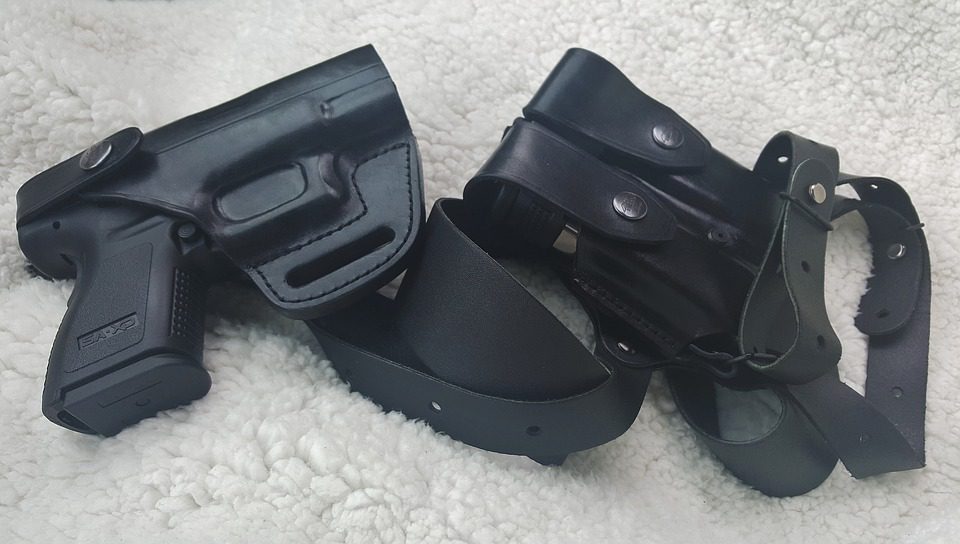
- Use a quality holster with positive retention. A trigger-guard click or a thumb-break strap is the difference between a holster that holds the firearm and one that releases under unexpected motion
- Avoid printing — the firearm should not be visible through your clothing, both for legal compliance in many jurisdictions and to avoid attracting attention
- Be aware of your surroundings, particularly in crowded environments where contact with other people creates opportunities for skilled pickpockets
- For open-carry situations (where legal), use a Level II or higher retention holster with a rotating hood or thumb-break specifically designed to resist gun snatching
Documentation as One of the Tips to Protect Your Guns from Theft
The serial number of every firearm you own should be recorded in at least two places — one paper, one digital. This is one of the most overlooked tips to protect your guns from theft because it does not prevent theft, but it dramatically improves the odds of recovery if a theft happens.
- Record make, model, caliber, and serial number for every firearm
- Photograph each firearm clearly, including the serial number area
- Store the records somewhere separate from the firearms themselves — a fireproof safe deposit box, encrypted cloud storage, or a copy with a trusted family member
- Update the records when firearms are sold, transferred, or acquired
- If a firearm is ever stolen, file a police report immediately and provide the serial number — the National Crime Information Center (NCIC) database queries during arrests automatically check for stolen firearms
The Bureau of Alcohol, Tobacco, Firearms and Explosives publishes a downloadable Firearm Personal Property Record specifically for this kind of inventory documentation.
Alarm Systems and Active Monitoring
For owners with significant collections, the practical tips to protect your guns from theft extend to active monitoring. A monitored alarm system tied to a 24/7 security service is a meaningful deterrent — most burglars leave the moment an alarm sounds, and the police response window is short enough that even a determined thief rarely has time to defeat a quality safe.
Security cameras add another layer. Modern IP cameras with cloud recording produce evidence that helps recover stolen firearms even when the burglary itself is successful. A combination of monitored alarm, exterior cameras at entry points, and interior cameras covering the storage area covers most of the realistic threat scenarios.
The Layered Approach Behind All Tips to Protect Your Guns from Theft
No single measure is enough. The tips to protect your guns from theft work as a system: hidden bolted safes at home, vehicle safes for transport, retention holsters during carry, complete documentation throughout, and active monitoring layered on top. A determined and well-equipped thief can defeat any single measure given enough time. The combination of multiple measures makes the time-to-defeat long enough that the thief moves on to easier targets.
For more on responsible firearm ownership and storage, see our guides on how to store guns safely at home and dangerous mistakes new gun owners make.