







Gun Registered to Me (Video)
When someone says “there is a gun registered to me that I no longer own,” they are usually thinking about one specific worry: what happens when law enforcement traces that firearm back to them years after the sale. It is one of the most common questions Gun Transfer America gets, and one of the most consequential to answer correctly. The short version: a gun registered to you that you have legitimately transferred should never come back to you as a problem — IF you can produce documentation showing when, to whom, and under what conditions you sold it. Without documentation, even a perfectly legal private sale can become an unpleasant interview when the firearm surfaces in a crime scene investigation.
This article walks through the realistic scenarios where a gun registered to me may resurface, what documentation you should be keeping, and how to clean up records on past sales where you did not document properly at the time. The video below from Gun Transfer America covers the same topic visually.
What “A Gun Registered to Me” Actually Means in U.S. Law
It is worth clearing up a common misconception first. Most U.S. states do not have a true firearm registry — there is no central government list of who currently owns which firearm. What does exist is the federally-required ATF Form 4473 that licensed dealers fill out for every retail sale, which establishes the original purchaser of the firearm. The ATF maintains records of FFL transactions, and when law enforcement traces a firearm recovered at a crime scene, the trace generally leads back to the original FFL purchaser — the person whose name is on the 4473.
So “a gun registered to me” usually means “a firearm I originally purchased from a licensed dealer, regardless of whether I still own it.” If you sold the gun to a private buyer years later, no centralized registry tracks the transfer. The firearm may still trace to you, even though you no longer have it.
Why a Gun Registered to Me May Resurface Years Later
The most common scenarios that bring an old gun registered to me back into the picture:
- Law enforcement recovers the firearm at a crime scene and traces it through the ATF
- A subsequent owner uses the firearm in a self-defense incident that gets reported
- The firearm is stolen from a later owner and shows up as part of a stolen-gun investigation
- An estate question — the firearm shows up in a deceased person’s possessions and law enforcement contacts the original purchaser to ask about the chain of custody
- An ATF inquiry about a specific firearm during a routine FFL audit
In each of these scenarios, the trace leads to the original FFL purchaser. The ATF or local law enforcement will contact you, ask whether you still own the firearm, and want documentation of any transfer. If you can produce a bill of sale showing when you sold the firearm and to whom, the conversation is short and friendly. If you cannot, the conversation gets longer and more uncomfortable, even if you have done nothing wrong.
Documentation You Should Have for Every Gun Registered to Me
For every firearm currently in your possession AND for every firearm you have ever sold or transferred, the documentation should include:
- Original purchase receipt or copy of the 4473 (request a copy from the FFL who sold it to you, when possible)
- Make, model, caliber, and serial number of the firearm
- For sold firearms: a signed bill of sale with both parties’ full legal names, contact information, and ID verification (typically driver’s license number)
- For sold firearms: the date of the transfer
- For sold firearms: any background check confirmation if one was performed
- For lost or stolen firearms: a copy of the police report
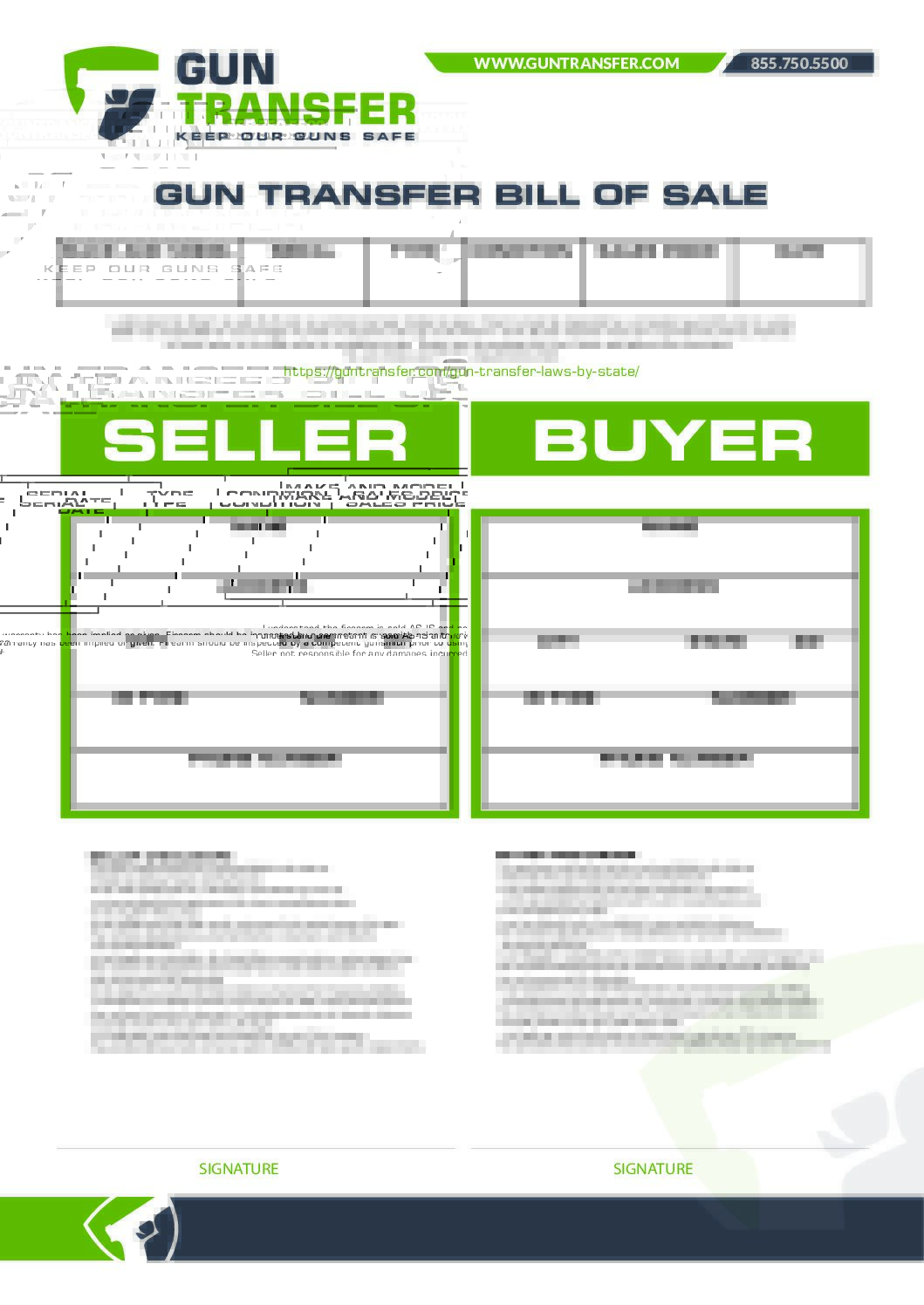
The Bureau of Alcohol, Tobacco, Firearms and Explosives publishes detailed guidance on what documentation matters most when a firearm is traced. The single most useful document for any gun registered to me is a signed, dated bill of sale showing the firearm left your possession on a specific date to a specifically identified person.
We handle the legal part for you.
You know the rules now — here’s the easy part. A real background check on the buyer, a signed bill of sale, and permanent records, done from your phone in about 10 minutes. Flat $50.
What to Do If You Have Undocumented Past Sales
The hardest scenario is the one most people are actually in: firearms registered to me from years past that I sold informally, with no bill of sale, to a buyer whose name I may not remember. This is unfortunately common, and there is no perfect retroactive fix. What you can do:
- Reconstruct what you can. If you remember the buyer’s name, contact them and ask for a retroactive bill of sale. Many will sign one without issue if they still have the firearm
- Document what you remember. Even a note to your own records — “Sold Glock 19 serial number X on approximate date Y to person Z, met through gun show in city W” — is better than nothing. Keep the note dated and signed
- Report stolen firearms. If a firearm registered to you was actually stolen at some point and you never reported it, a delayed police report is still useful and may help establish that the firearm left your possession involuntarily
- Document the firearm’s current absence. A statement that the firearm has not been in your possession since approximately a given date, signed and dated, gives investigators a starting point
None of these retroactive steps is perfect, but each one reduces the gap between what investigators know and what you can prove. The closer those two get, the shorter and less stressful any future inquiry becomes.
Going Forward: A Bill of Sale for Every Future Transfer
The single most effective protection for any future firearm transaction is a complete bill of sale at the time of sale. Every responsible private-party seller should generate a bill of sale that includes the firearm’s identifying information, both parties’ identification, the sale date and price, and signatures. Keep a copy for yourself, give a copy to the buyer, and store the document somewhere durable.
A digital lifetime record of every firearm you have ever owned, sold, or transferred is the modern best practice. Stored on encrypted servers, accessible only to you, complete with PDF copies of every bill of sale, the digital record turns “gun registered to me from twenty years ago” from a legal worry into a thirty-second lookup. Our guide on building a digital lifetime record walks through what to include and how to set one up.
Watch the Full Discussion on Guns Registered to Me
The video below covers the same scenarios from a slightly different angle, with a few practical examples of what to do if the ATF or local police do contact you about a gun registered to me from years past:
The Bottom Line on Any Gun Registered to Me
If a firearm is currently registered to you, document it. If you have transferred a gun registered to me in the past, reconstruct what documentation you can and adopt the bill-of-sale habit going forward. The firearm itself is not the source of the legal exposure — the documentation gap is. Close the gap and the worry goes away. For more on the broader practice of safe firearm sales and storage, see our guides on 3 tips to protect yourself when selling a gun and how to store guns safely at home.

A handshake isn’t a transfer.
Make it legal.
In your state, the seller carries the federal liability. One undocumented sale to the wrong person is the difference between a clean record and 18 U.S.C. § 922(d). For \$50, you get proof you did it right.
- Real background check on the buyerMulti-source federal, state & county criminal + sex-offender records.
- Official bill of sale, signed by both partiesElectronic. Documented to hold up in court.
- Lifetime digital records in your Gun VaultPull them 5, 10, 20 years from now.
- Done from your phone in ~10 minutesNo gun-shop visit required in your state.
I sold a pistol to someone I met online and didn’t sleep well about it. Did the whole thing from my couch in ten minutes.— Nathan M., verified seller
Secure checkout · No FFL markup · No range fees · Flat $50 every time.