








Gun Transfer Featured on Green Light Shooting (Video)
Gun transfer featured on green light shooting
Gun Transfer Featured on Green Light Shooting. A successful private party firearm transfer takes one part legal knowledge, one part documentation, and one part willingness to slow down and do it right. Most U.S. states allow private-party firearm sales between residents of the same state without an FFL, but the trade-off is that the seller carries the responsibility for verifying the buyer, documenting the sale, and following every state-specific rule along the way. Done right, a private-party transfer is faster and cheaper than going through a dealer. Done wrong, it exposes the seller to civil and criminal liability that can surface years later.
This guide walks through what every responsible private party firearm transfer requires, with a particular focus on the parts most sellers either skip or get wrong. The video at the end of this article — produced by Green Light Shooting and featuring Gun Transfer America — covers the same ground in a different format and is worth watching after reading.
What a Private Party Firearm Transfer Actually Is
A private party firearm transfer is the sale, gift, or other voluntary transfer of a firearm between two private individuals, neither of whom is a Federal Firearms Licensee (FFL). It includes a sale to a friend, a gift to a family member, an inheritance from a relative’s estate, or a sale to a buyer met through a classified ad or gun show. The defining feature is that no licensed dealer is part of the transaction — and consequently, no ATF Form 4473 and no NICS background check are federally required for the transfer itself.
State laws vary dramatically on top of the federal baseline. Some states (California, Colorado, Washington, New York, and several others) require all private party firearm transfers to go through a licensed dealer or include a background check. Other states allow private transfers freely between residents. A few states have hybrid rules — handguns require a permit-to-purchase or background check, but long guns can be transferred privately. The first rule of any private party firearm transfer is to know what your state actually requires.
Federal Rules That Apply to Every Private Party Firearm Transfer
Even in states where private transfers are largely unregulated, federal rules apply universally:
- You may not knowingly sell or transfer a firearm to anyone you know or have reasonable cause to believe is a prohibited person (felons, people convicted of domestic violence, certain mentally ill individuals, undocumented immigrants, and others under 18 U.S.C. § 922(g))
- You may not transfer a firearm across state lines without going through an FFL — a private interstate transfer is a federal felony
- You must comply with the federal age minimums (21 for handguns from a dealer, 18 for long guns; private-party rules can differ but cannot fall below the federal floor)
- You may not engage in the business of dealing firearms without a license — repeated private sales for profit can be construed as unlicensed dealing
The federal rule against transfers to prohibited persons is the highest-stakes one for the seller. A felony conviction with up to 10 years of prison time is the potential penalty, and the standard is whether you “knew or had reasonable cause to believe” the buyer was prohibited — not whether you actually verified. Doing your due diligence is what protects you.
Verifying the Buyer in a Private Party Firearm Transfer
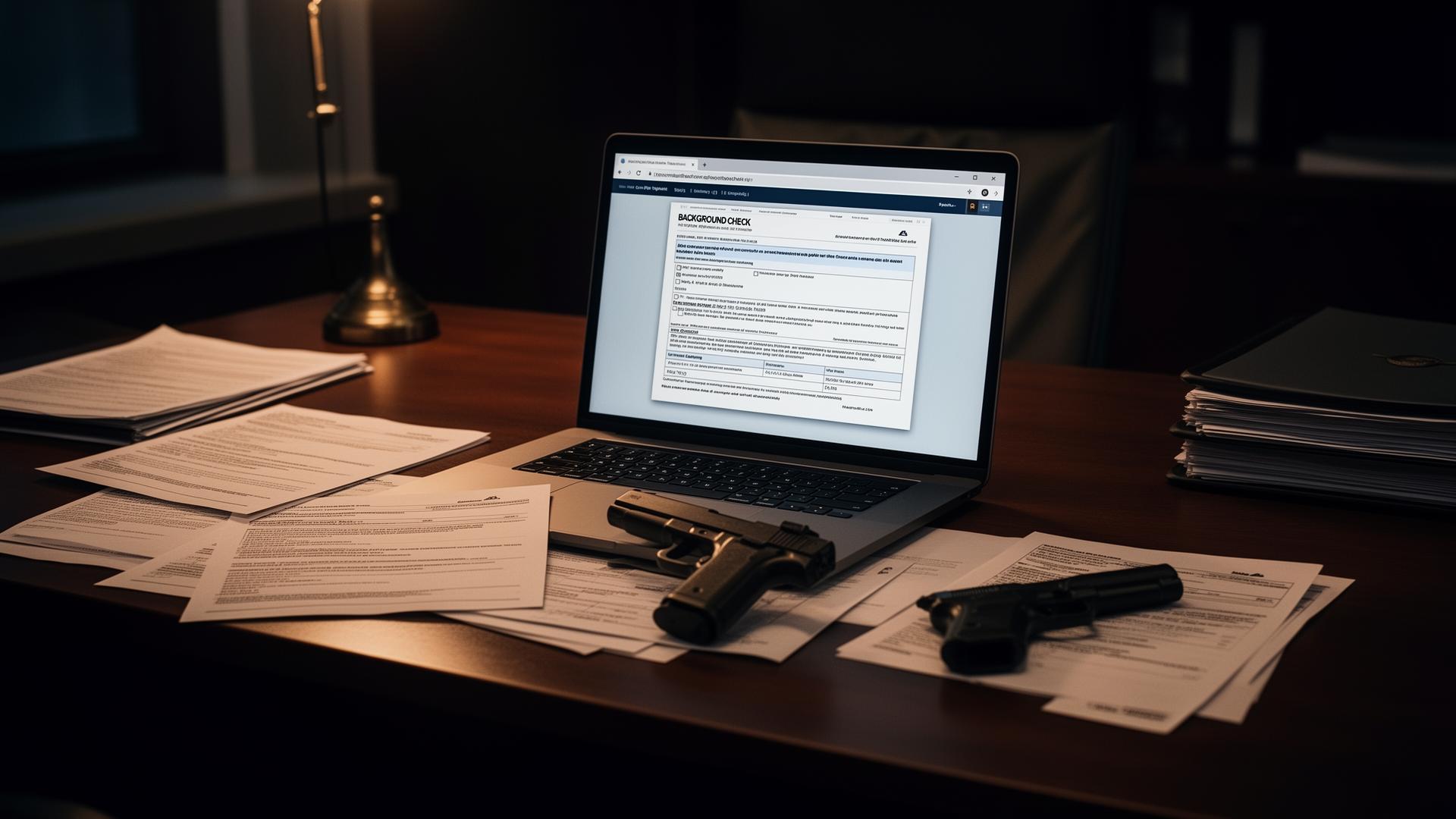
Verifying the buyer is the single most underemphasized part of a private party firearm transfer. At a minimum, every responsible seller should:
- Verify a government-issued photo ID and confirm the address matches the buyer’s claimed state of residence
- Confirm both buyer and seller are residents of the same state (interstate transfers require an FFL)
- Have the buyer attest in writing that they are not a prohibited person under federal or state law
- Run a private-party background check where available — many states allow private parties to use a licensed dealer for a fee, and online services can verify a buyer’s status against public records
- Walk away if anything feels off — evasive answers, refusal to show ID, an offer well above asking price, or an obvious rush all justify ending the transaction
The single sentence most often missing from informal private-party paperwork is the buyer’s attestation that they are legally permitted to own the firearm. Adding that line to the bill of sale, with the buyer’s signature, shifts the legal weight of any future inquiry from “did the seller verify” to “did the buyer falsely attest” — a meaningful protection.
We handle the legal part for you.
You know the rules now — here’s the easy part. A real background check on the buyer, a signed bill of sale, and permanent records, done from your phone in about 10 minutes. Flat $50.
Documenting a Private Party Firearm Transfer
Every private party firearm transfer should produce a complete bill of sale, signed by both parties, with copies retained by both. A complete bill of sale includes:
- Date of the sale
- Both parties’ full legal names, addresses, and contact information
- Government-issued ID numbers (driver’s license is standard)
- Make, model, caliber, and serial number of the firearm
- Sale price (including $0 or “gift” for non-monetary transfers)
- Buyer’s attestation that they are legally permitted to own the firearm
- Signatures of both parties (and ideally a witness)
Keep a paper copy in a safe location and a digital backup somewhere accessible. A scanned PDF stored on encrypted cloud storage protects you if the paper copy is ever lost, damaged, or destroyed in a fire. Our guide on building a digital lifetime record covers what to store and how.
State-Specific Considerations for a Private Party Firearm Transfer
Every state’s private-transfer rules deserve a careful read before any sale. Common state-level requirements that vary:
- Background check requirement. Some states require all private transfers to go through a dealer; others require checks for handguns only; others have no requirement
- Waiting periods. Several states impose a waiting period of 3-10 days from sale to delivery, even for private-party transactions
- Age limits. Several states set higher age minimums than federal law for handgun purchases, and some apply the same to private transfers
- Permits. A handful of states require buyers to hold a permit-to-purchase or firearm owner identification card before any private transaction
- Recordkeeping mandates. A few states require sellers to keep transaction records for a specified number of years, and to make them available to law enforcement on request
Pull up your state attorney general’s website for the current rules before any transaction. Rules change every legislative session, and the buyer or seller who relies on five-year-old guidance can land in real trouble even with good intentions.
Why an Online Platform Helps Streamline a Private Party Firearm Transfer
Platforms like Gun Transfer America exist to handle the documentation and verification steps of a private party firearm transfer in one place — generating a state-compliant bill of sale, verifying both parties’ identities, optionally running a background check on the buyer, and producing a permanent encrypted record both parties can retrieve later. The convenience is meaningful: a process that takes thirty minutes by hand becomes a ten-minute online flow, and the record quality improves substantially over a hand-written bill of sale.
The video below is from Green Light Shooting, who walked through the Gun Transfer America platform on their channel. It shows the actual flow of using the platform for a private party firearm transfer — buyer verification, documentation, the bill of sale generation — and is a useful next watch after reading this guide.
Watch the Green Light Shooting Walkthrough
Final Thoughts on Any Private Party Firearm Transfer
A private party firearm transfer is straightforward when you do the homework, verify the buyer, and document the sale. It becomes a legal nightmare when shortcuts get taken — no ID check, no bill of sale, no follow-up storage of the records. The cost of doing it right is thirty minutes and a printed sheet of paper. The cost of doing it wrong can be years of legal exposure.
For more on the practical mechanics of private firearm sales, see our guides on 3 tips to protect yourself when selling a gun and how to store guns safely at home.

A handshake isn’t a transfer.
Make it legal.
In your state, the seller carries the federal liability. One undocumented sale to the wrong person is the difference between a clean record and 18 U.S.C. § 922(d). For \$50, you get proof you did it right.
- Real background check on the buyerMulti-source federal, state & county criminal + sex-offender records.
- Official bill of sale, signed by both partiesElectronic. Documented to hold up in court.
- Lifetime digital records in your Gun VaultPull them 5, 10, 20 years from now.
- Done from your phone in ~10 minutesNo gun-shop visit required in your state.
When my father passed I inherited a safe full of guns and had no idea how to sell them legally. This walked me through every one.— Henry P., verified seller
Secure checkout · No FFL markup · No range fees · Flat $50 every time.