







How To Anonymously Transfer A Gun (Video)
The question of how to anonymously transfer a gun comes up regularly, and the honest answer surprises most people who ask it: in most U.S. states, it is already legal to transfer a firearm in a private-party sale without the federal government recording the transaction in any centralized database. There is no federal gun registry. Federal law tracks the original retail purchase through a licensed dealer’s ATF Form 4473, but private-party transfers between residents of the same state generally are not federally reported. The real questions worth asking are not “is anonymous transfer possible” but rather “what are the actual legal requirements,” “what documentation should I keep for my own protection,” and “where do anonymity and responsible ownership intersect.”
This guide explains how to anonymously transfer a gun within the limits of federal and state law, what the practical limits of anonymity actually are, and why complete documentation between the two parties — even on a privacy-respecting transfer — protects everyone involved.
What “Anonymous” Actually Means in Firearm Transfers
Most U.S. gun owners use “anonymous” to mean one of three different things, and clarifying which is intended changes the answer significantly:
- “No central government database tracks the transfer.” True for most private-party transfers in most states — there is no federal firearm registry
- “The two parties don’t know each other’s identities.” Almost never legal — federal law prohibits transfers to unverified prohibited persons, and you cannot verify someone is not prohibited without knowing who they are
- “There is no paper trail anyone could ever produce.” Achievable only by skipping documentation entirely, which dramatically increases the seller’s legal exposure if the firearm later surfaces in a crime
The first sense is normal and legal. The second sense is incompatible with federal law. The third sense is technically possible in many states but is a serious mistake from a self-protection standpoint.
How to Anonymously Transfer a Gun Within the Law
The practical answer to how to anonymously transfer a gun in the first sense (no government database recording the transaction) is straightforward in most states. Federal law allows residents of the same state to transfer a firearm between themselves without going through an FFL — meaning no Form 4473, no NICS check, no federal record of the specific transaction. State law layers on top, and roughly a dozen states extend the background check requirement to private sales. In states without that requirement, a private-party transfer can be conducted with no government involvement and no government record of the firearm changing hands.
The Bureau of Alcohol, Tobacco, Firearms and Explosives has consistently maintained that there is no federal firearm registry. The agency does not track who currently owns which firearm. When law enforcement traces a firearm recovered at a crime scene, the trace leads to the original FFL purchase via Form 4473 — not to whoever currently has the gun.
The Federal Limits on Anonymous Transfers
Even in the most permissive state, federal law sets non-negotiable limits on how to anonymously transfer a gun:
- You may not knowingly transfer a firearm to a prohibited person — felons, those convicted of domestic violence, certain mentally ill individuals, undocumented immigrants, and others enumerated in 18 U.S.C. § 922(g)
- You may not transfer a firearm across state lines without going through an FFL — interstate private transfers are a federal felony
- You may not engage in the business of dealing firearms without a license — repeated private sales for profit can be construed as unlicensed dealing
- You must comply with federal age minimums (18 for long guns, 21 for handguns from a dealer; private transfer rules vary by state but cannot fall below the federal floor)
The first rule is the highest-stakes one for any seller asking how to anonymously transfer a gun. The standard for liability is whether the seller “knew or had reasonable cause to believe” the buyer was prohibited. Doing zero verification increases the chance that “reasonable cause” applies. Verifying the buyer’s identity and obtaining their signed attestation that they are not a prohibited person is the practical line between “private transfer” and “willful blindness.”
Why Total Anonymity Is Bad for the Seller
The instinct toward total anonymity — no names exchanged, no bill of sale, no contact information retained — is understandable from a privacy standpoint but disastrous from a legal-protection standpoint. Once the firearm leaves your possession, you cannot control what happens to it. The buyer might use it lawfully for thirty years, or might use it in a crime next week. If the firearm is traced back to your name on the original Form 4473 and you cannot produce documentation showing when you transferred it and to whom, you are the most prominent person in the investigation.
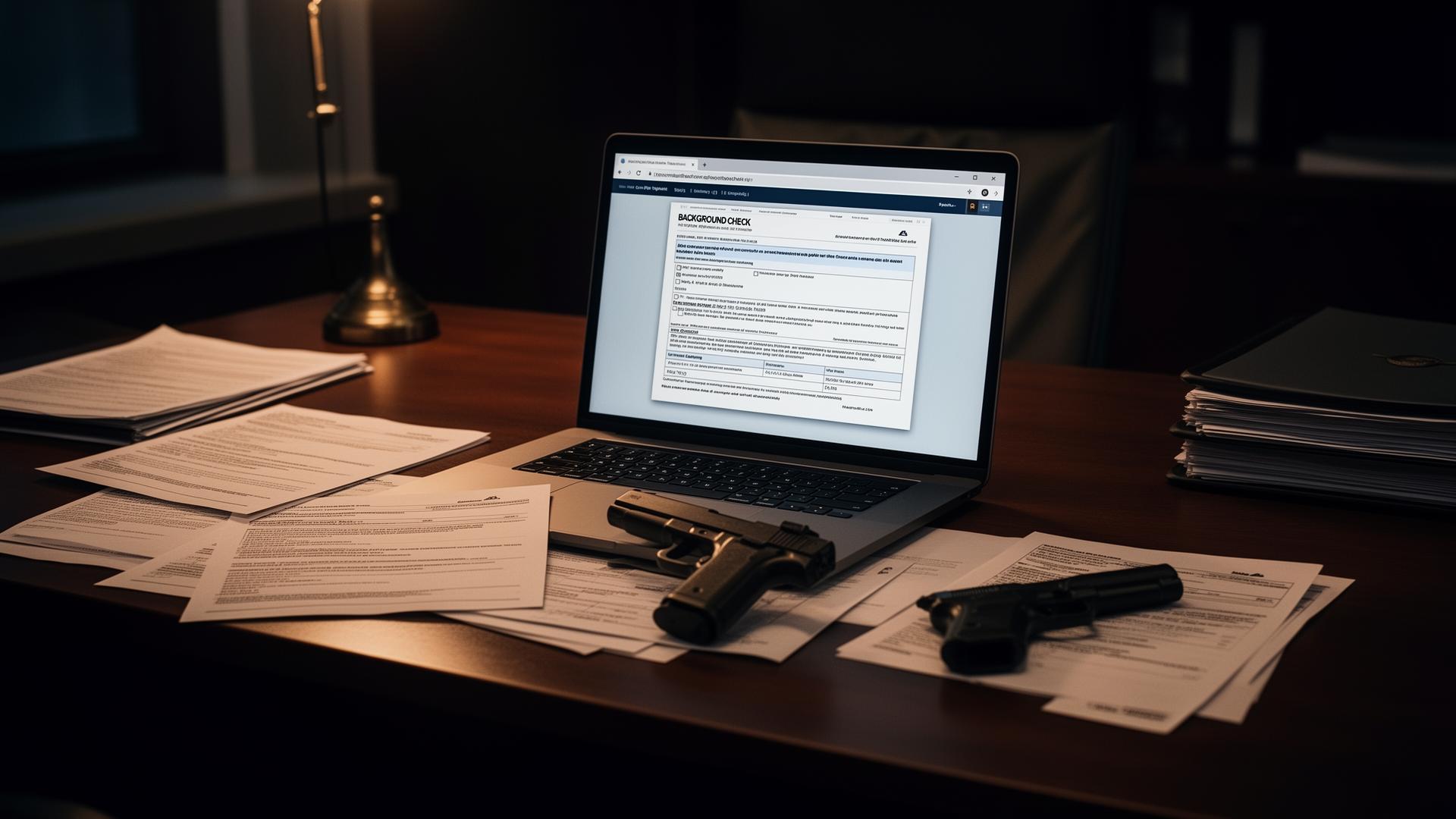
A bill of sale signed by both parties accomplishes everything responsible privacy requires while protecting you from this scenario. The bill of sale stays between you and the buyer (and is not reported to any government agency). You retain a copy. The buyer retains a copy. Neither of you sends it anywhere. But if the firearm later surfaces in a tracing inquiry, you can produce the document showing the firearm left your possession on a specific date to a specifically identified buyer.
We handle the legal part for you.
You know the rules now — here’s the easy part. A real background check on the buyer, a signed bill of sale, and permanent records, done from your phone in about 10 minutes. Flat $50.
What a Privacy-Respecting Bill of Sale Should Include
A complete bill of sale on a private-party transfer covers:
- Date of the transfer
- Both parties’ full legal names and addresses
- Government-issued ID numbers (typically driver’s license)
- Make, model, caliber, and serial number of the firearm
- The sale price (or “$0, gift” for non-monetary transfers)
- The buyer’s signed attestation that they are legally permitted to own the firearm under federal and state law
- Both parties’ signatures (and ideally a witness)
That document never goes to any government agency unless one is later legally required to produce it. It stays in your records — paper or encrypted digital — and protects you if any future inquiry arises.
How to Anonymously Transfer a Gun While Documenting Properly
Combining how to anonymously transfer a gun with proper documentation produces the best outcome for both parties. The transfer itself is unrecorded by any government registry. The documentation lives only in the two parties’ private records. Both parties have proof of when and how the firearm changed hands, available only if a law-enforcement inquiry later requires it.
For the most privacy-respecting documentation, use an online firearm transfer platform that encrypts the bill of sale on the seller’s account, gives the buyer their own copy, and gives both parties the option to permanently delete the record. Our guide on building a digital lifetime record walks through exactly how this works.
How to Anonymously Transfer a Gun While Staying Responsible
The push for total anonymity in firearm transfers usually comes from a real and reasonable concern about government overreach. The privacy concern is legitimate. But the practical answer is not to skip documentation — it is to control where the documentation lives. A bill of sale on encrypted personal storage protects your privacy from random scrutiny while protecting you from the legal exposure of an undocumented transfer if the firearm ever surfaces years later.
For more on the practical mechanics of safe and legal firearm sales, see our guides on 3 tips to protect yourself when selling a gun and what happens when a gun registered to me surfaces years later.
Watch the Discussion on How to Anonymously Transfer a Gun

A handshake isn’t a transfer.
Make it legal.
In your state, the seller carries the federal liability. One undocumented sale to the wrong person is the difference between a clean record and 18 U.S.C. § 922(d). For \$50, you get proof you did it right.
- Real background check on the buyerMulti-source federal, state & county criminal + sex-offender records.
- Official bill of sale, signed by both partiesElectronic. Documented to hold up in court.
- Lifetime digital records in your Gun VaultPull them 5, 10, 20 years from now.
- Done from your phone in ~10 minutesNo gun-shop visit required in your state.
I almost burned half a Saturday driving to a gun shop. Instead I did it from my phone for fifty bucks.— Brandon T., verified seller
Secure checkout · No FFL markup · No range fees · Flat $50 every time.